OEM/ODM CNG LPG ECU Kits: A Buyer's Checklist
News Details
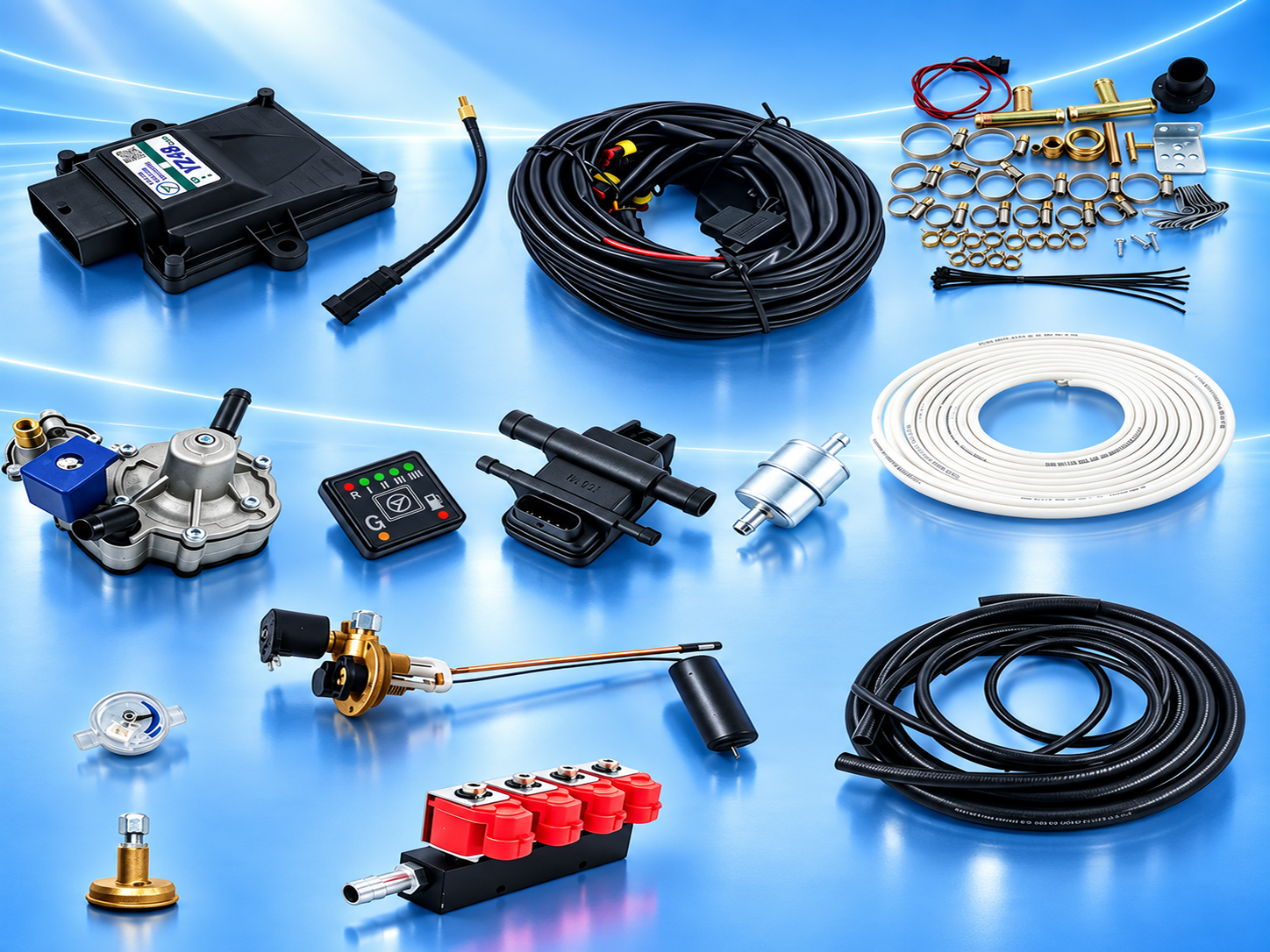
Looking for a reliable OEM CNG LPG ECU supplier for your brand or distribution business?
At the sourcing stage, product price is only one part of the decision. You also need to check ECU compatibility, software functions, factory quality, custom options, and delivery terms.
For distributors, conversion workshop chains, and private label brands, choosing the wrong supplier can lead to installation problems, product returns, and extra costs.
This checklist helps you compare suppliers, prepare your RFQ, review samples, and confirm an OEM/ODM order.
1. Define Your OEM or ODM Project Before Requesting a Quote
First, decide what type of customization you need.
OEM CNG LPG ECU projects may use an existing ECU model with your brand, packaging, or agreed product settings.
ODM autogas ECU projects may involve changes to hardware, software, connectors, or control functions.
Before contacting a factory, prepare the following details:
l Target country and sales market
l CNG or LPG application
l Vehicle models and engine types
l Engine cylinder count
l Required OBD functions
l Expected order quantity
l Branding and packaging needs
l Required product approvals
Clear requirements help suppliers offer accurate prices and avoid unnecessary changes later.
2. Check ECU Hardware and Vehicle Compatibility
A low-cost ECU is not a good deal if it does not fit your customers' vehicles.
Ask the supplier to confirm:
l ECU model and connector pin count
l Supported engine types and cylinder counts
l Supply voltage
l Wiring harness and connector layout
l Sensor compatibility
l OBD functions and supported protocols
l Required installation space
For example, NGV-SC offers YZ24 and YZ48 series gas ECU systems for different applications.
Its 24-pin and 48-pin products provide buyers with different hardware options.
NGV-SC also supports hardware customization, including circuit board design, ECU housing, and interface layout.
However, a similar connector does not guarantee direct replacement. Always compare pin assignments, electrical signals, software functions, and vehicle requirements.
3. Review Software Calibration and Custom Functions
Software is a key factor when comparing a custom gas ECU manufacturer.
Your local installers need software they can understand and use.
Therefore, ask these questions before ordering:
l Which calibration software does the ECU use?
l Can the software support your target vehicles?
l Can the factory adjust fuel control settings?
l Are custom functions available?
l Can installers access fault information?
l How are software versions managed?
l What technical support is available after delivery?
NGV-SC develops its own gas ECU control systems and supports software calibration and function customization.
Its LYZCal software ecosystem includes different calibration approaches for installers familiar with established autogas systems.
For buyers switching from another supplier, this can be an important point to review.
Still, software workflow similarity should not be treated as full compatibility. Request a demonstration and test the actual ECU before approving the project.
4. Compare Complete Kit Contents, Not Just ECU Prices
When buying private label CNG LPG kits, always compare the same product configuration.
One supplier may quote only the ECU and wiring harness. Another may include injectors, sensors, a reducer, and other parts.
A useful quotation should clearly list:
|
Item |
What Buyers Should Confirm |
|
Gas ECU |
Model, functions, software version |
|
Wiring harness |
Length, connectors, pin layout |
|
Injector rail |
Model, flow capacity, cylinder fit |
|
Pressure reducer |
CNG or LPG type, engine suitability |
|
Sensors |
Type and electrical compatibility |
|
Change-over switch |
Model and display functions |
|
Accessories |
Valves, filters, pipes, fittings |
|
Packaging |
Standard or private label |
Also, check which parts are excluded.
CNG and LPG use different fuel pressure systems. Therefore, the reducer, valves, pipes, and other fuel parts must match the selected gas type.
A detailed packing list makes supplier comparisons more accurate.
5. Evaluate the Factory Before Bulk Purchasing
For serious importers and brand owners, factory checks are an important step.
Ask your potential supplier about its development team, production process, and quality checks.
Key areas include:
l In-house ECU design and development
l PCB assembly and production equipment
l Incoming component inspection
l ECU programming and function testing
l Final product inspection
l Product identification and traceability
l Sample and batch consistency
NGV-SC focuses on independently developed gas control systems. Its core engineering team has more than 20 years of industry experience.
The company also has electronic production capabilities, including SMT/DIP processes.
For factory evaluation, buyers should request current production information, quality documents, and relevant test records.
Where possible, arrange a factory visit or remote inspection before a large order.
6. Review NGV-SC Products for OEM/ODM Projects
NGV-SC supplies CNG and LPG ECU systems, ignition controllers, injector rails, reducers, sensors, and related autogas parts.
These products provide a starting point for distributors planning standard or customized product lines.
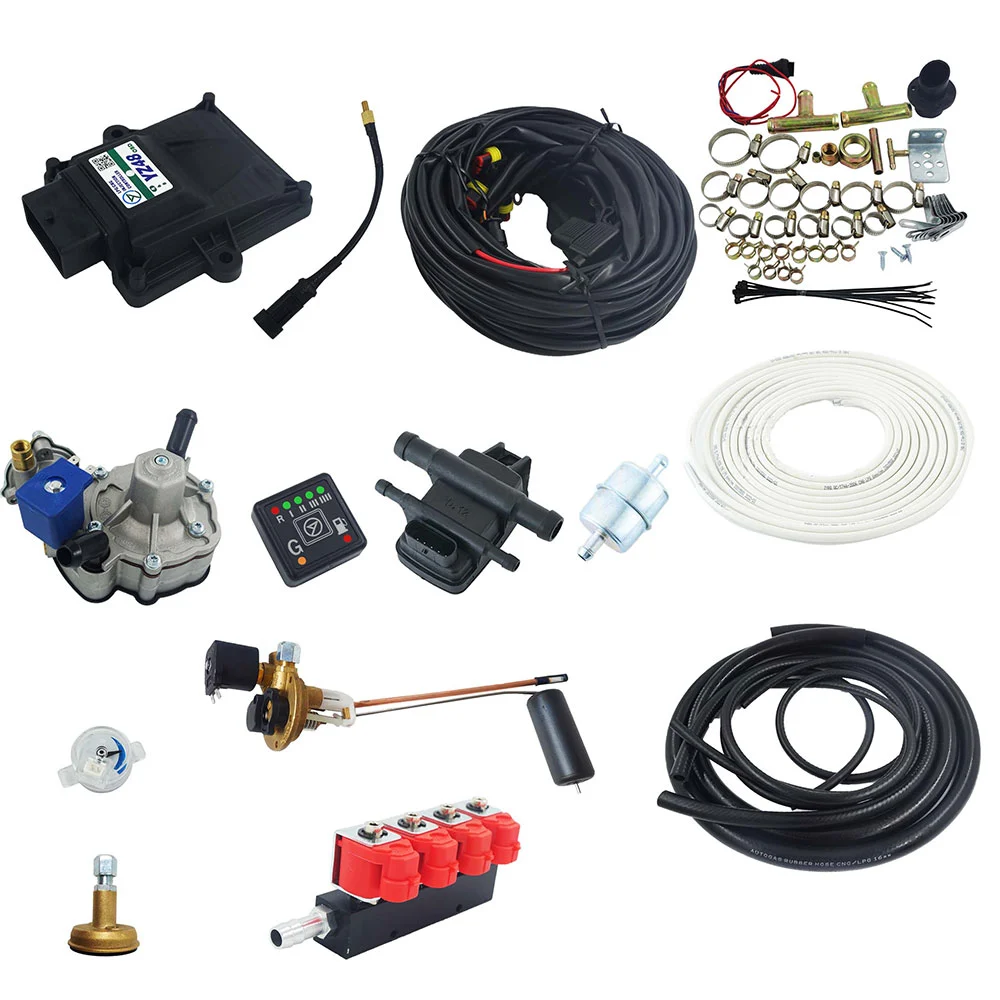
Featured Product: NGV-SC YZ48 OBD LPG Conversion System
The NGV-SC YZ48 OBD LPG Conversion System is designed for suitable three- and four-cylinder engines.
|
Specification |
YZ48 OBD LPG System |
|
ECU connector |
48 pins |
|
Supply voltage |
8–16V |
|
Engine application |
3–4 cylinders |
|
OBD function |
Yes |
|
Fuel application |
LPG |
The system includes an ECU, wiring harness, change-over switch, sensors, regulator, injector rail, and related parts.
For OEM/ODM buyers, the YZ48 OBD system can serve as a reference model when discussing branding, software settings, wiring, and kit configuration.
NGV-SC also offers CNG versions and other ECU models for different engine applications.
Explore the NGV-SC CNG Conversion Systems and LPG Conversion Systems to compare available options.
7. Confirm Private Label and Customization Details
Private label projects require clear written agreements.
NGV-SC offers OEM/ODM services covering product branding, packaging, hardware design, and software settings.
Before approving your order, confirm:
l Logo position and printing method
l Product label and model number
l Custom packaging design
l User manual language
l ECU hardware changes
l Software settings and version
l Sample approval process
l Ownership and use of custom designs
Not every change has the same cost or production requirements.
Therefore, ask the factory to separate standard options from new development work.
This helps you understand the real cost of your custom product.
8. Compare MOQ, Pricing, Lead Time, and Warranty
When comparing two suppliers, do not focus only on unit price.
Instead, request a full quotation with the same specifications and delivery terms.
|
Purchase Item |
Questions to Ask |
|
MOQ |
What is the minimum order for standard and custom products? |
|
Unit price |
Does the price include all listed components? |
|
Development cost |
Are there extra hardware or software charges? |
|
Sample cost |
What are the sample and testing terms? |
|
Lead time |
How long do samples and bulk orders take? |
|
Payment terms |
What payment schedule applies? |
|
Warranty |
What defects and service terms are covered? |
|
Spare parts |
Can replacement parts be ordered separately? |
|
Shipping |
Which Incoterms and delivery options are available? |
For NGV-SC projects, buyers should request these terms based on their actual order quantity and customization needs.
Do not assume that standard and ODM products have the same MOQ or lead time.
9. Approve Samples Before Mass Production
Sample testing is essential for a custom ECU project.
First, test the ECU on the target engine or vehicle.
Then, check installation, wiring, calibration, fuel switching, and system functions.
For an OBD model, confirm that the required diagnostic functions work with the target vehicle.
Before mass production, approve the final hardware, software version, component list, labels, and packaging.
Also, agree on how the supplier will handle changes after sample approval.
This process helps reduce costly problems during bulk delivery.
10. Send NGV-SC a Complete OEM/ODM RFQ
Ready to compare OEM CNG LPG ECU prices or start a private label project?
Send NGV-SC the following information:
l Company type: Distributor, conversion workshop, or brand owner
l Target market: Country or region
l Fuel type: CNG or LPG
l Vehicle application: Models, engines, and cylinder counts
l ECU requirements: OBD, connector, software, and custom functions
l Kit contents: ECU only or matched conversion components
l Branding: Logo, packaging, and manuals
l Order quantity: Sample quantity and expected bulk volume
l Other requirements: Certifications, delivery schedule, and technical documents
With this information, NGV-SC can review the project and discuss suitable product options, customization scope, and quotation terms.
Choose NGV-SC for Your Custom Autogas ECU Project
For distributors and private label brands, a successful OEM/ODM project depends on more than price.
You need suitable hardware, clear software functions, stable product quality, and a supplier that understands your market.
NGV-SC develops CNG/LPG gas control systems and offers hardware, software, and branding customization for international buyers.
Whether you need a standard ECU kit under your own brand or a custom gas control solution, start with clear technical requirements and sample testing.
Request an OEM/ODM Quotation
Visit NGV-SC to discuss your target vehicles, custom features, expected order quantity, and private label requirements.


